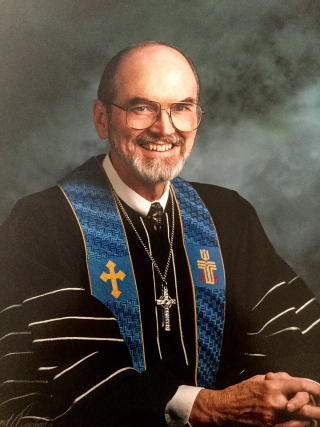
• –This is Jack's son, Toby, writing with sad news that Rev. Dr. Jack Rogers has passed away. Below are some details about his life and information about the memorial service.  

    Rev. Dr. Jack Rogers

    Jack Rogers was born January 23, 1934 in Lincoln, Nebraska to Harold and Ruth Rogers (a postman and a school teacher, respectively). He graduated Phi Beta Kappa from the University of Nebraska, where he was active in debate and led the Cornhusker marching band. After graduation, he served on a Christian mission to build a new conference center in Alexandria, Egypt. He attended Pittsburgh Xena Seminary, earning a Master of Divinity in 1956. He earned a Ph.D. in Philosophical Theology from the Free University in Amsterdam (studying under G. C. Berkouwer), while pastoring the Pilgrim Fellowship, an English speaking congregation in Dordrecht, the Netherlands.

    On July 6, 1957, he married his college sweetheart Sharon Mangold in Omaha, Nebraska. They had three sons: Matthew, John Mark, and Toby.

    Jack taught at Westminster College in New Wilmington, Pennsylvania from 1963-1971 where he also served as Assistant Academic Dean. In 1971, he moved to Fuller Seminary in Pasadena, California where he taught philosophical theology. He also started Fuller’s Office of Presbyterian Ministries and later served as Associate Provost. In 1988, Jack joined the national staff of the Presbyterian Church (U.S.A.) where he led the Theology and Worship unit. In 1990, he started the San Francisco Theological Seminary Southern California campus where he served as a professor and Vice President from 1990-2000. He officially retired from academia in 2000 and became a reader at the Huntington Library in San Marino, California. But it turned out his greatest contributions to the church were yet to come.

    Jack was a prolific author, publishing thirteen books, and he played an active role in Presbyterian polity throughout his career. His books “Biblical Authority” (1977) and “The Authority and Interpretation of the Bible” (1979) co-authored with Don McKim helped guide the church toward a more holistic approach to Biblical interpretation. Through advocacy and outreach he worked to increase the representation of women and people of color at Fuller. He helped shape “A Brief Statement of Faith,” ratified by the Presbyterian Church (U.S.A.) General Assembly in 1991, that emerged from the reunion of the northern and southern branches of the Presbyterian Church.

    He was elected Moderator of the 213th General Assembly of the Presbyterian Church (U.S.A.) in June 2001, in Louisville, Kentucky. For the next ten years he was a central figure in the campaign to change the church constitution to allow people who are lesbian, gay, bisexual, or transgender (LGBT) to be ordained and married in the church. His book, “Jesus, the Bible, and Homosexuality: Explode the Myths, Heal the Church” (2006) made a Biblical case for LGBT equality. An expanded second edition came out in 2009. LGBT ordination was ratified in the Presbyterian Church (U.S.A.) on May 10, 2011; same-sex marriage was approved on March 17, 2015. In the last years of his life he was happily working on a biography of seventeenth century English Puritan, Edward Reynolds.

    Jack is survived by Sharon, his wife of 59 years; their three sons Matthew (and his wife Yvonne Gonzalez Rogers), John (and his wife Chi Nguyen), and Toby; his three grandchildren: Christopher, Maria, and Josh; his sister Jane Lundeen (and her husband Bob); and by his brother-in-law Steve Mangold (and his wife Maggie).

    A memorial service, celebrating his life, will be held on Friday, July 22, at 11 a.m. at Pasadena Presbyterian Church, 585 E. Colorado Blvd. (parking on Madison Avenue) with a reception and a light lunch to follow in the Church’s Gamble Lounge. You can RSVP for the lunch by clicking (here). 

    Donations in lieu of flowers can be sent to the Theological Education Fund of the Presbyterian Church (U.S.A.) by clicking (here), the Huntington Library by clicking (here), or Presbyterian Missions by clicking (here you can indicate "This is a Memorial Donation" in Memory of Jack Rogers). 


    Articles about Jack's life and legacy:

    Presbyterian Mission Agency: "Former General Assembly Moderator and renowned scholar, Jack Rogers, dies at age 82"

    The Huffington Post: "The Rev. Dr. “Mr.” Jack Rogers, Mentor and Friend"

    Covenant Network of Presbyterians: "Jack B. Rogers: In life and in death we belong to God"

    Presbyterian Outlook: "Jack Rogers, former PC(USA) moderator, dies"

    Seminario Evangélico Unido de Teología, "Adiós a un amigo de SEUT

  • Dr. Pam Byers

    It is hard to overstate Pam Byers' impact on the Presbyterian Church (U.S.A.), the nation, and the world. Pam Byers made history and brought our church into closer alignment with God's loving grace for all people.

    As the founding Executive Director of The Covenant Network (where she served from 1997 to 2011), Pam Byers opened up a space and held that space open until the rest of us could walk through into a better future for all God's children. Pam Byers understood clearly, early on, that our church could and indeed must support full equality for people who are lesbian, gay, bisexual, or transgender (LGBT). Holding open a space is extremely difficult work. It requires vision to know that the cause is just and tenacity to survive the slings and arrows inevitably directed at the prophets.

    For the better part of two decades, Pam held that door open and asked others to see the possibilities for a more just church on the other side. She was a key figure in encouraging me to run for Moderator. A former publishing executive, she provided critical edits that improved the manuscript for Jesus, the Bible, and Homosexuality. And she helped organize several nationwide book tours for me, even setting up the folding chairs and selling books in the back whenever I was in the Bay Area. She also reached out to current leaders like Rev. Dr. Mark Achtemeier and thousands of others to encourage them to work for LGBT equality in the church.

    Even though she was one of the most important political figures in the church, there was nothing political about Pam. She believed that through faith and prayer and lots and lots of conversations, the church would eventually follow the leadings of the Holy Spirit and move forward to support LGBT equality. And she was correct.

    Thanks to Pam's tireless efforts, today, people who are LGBT can be ordained in the church. Following the actions of the 221st General Assembly (where Pam was once again an instrumental leader), now same sex couples who have received a marriage license from a civil jurisdiction may be officially married in the church. With God's grace, soon, the church will further affirm that welcome for same sex marriage by updating the Directory for Worship. This is the result of the faithful efforts of thousands of people. But Pam was the architect, the "drum major for justice" who helped to show the way.

    Pam you will be dearly missed. But God called a good one home. And while you were on this earth you did God's work. Thank you Pam, for your extraordinary, amazing, life giving service to the church.

    A memorial service will be held at Old First Presbyterian Church in San Francisco at 10:00 a.m. on Saturday, November 8, 2014.

  • South African Archbishop Emeritus Desmond Tutu, a winner of the Nobel Peace Prize, has written a beautiful letter to Stated Clerk Gradye Parsons in support of the Presbyterian Church (U.S.A.)’s decision to allow people who are lesbian, gay, bisexual, or transgender to be ordained in the church:

    23 September 2011

    The Rev. Gradye Parsons
    Stated Clerk
    Presbyterian Church (U.S.A.)
    100 Witherspoon Street
    Louisville KY 40202-1396

    Dear Brother in Christ,

    I am writing you with the request that you share these thoughts with my brothers and sisters in the Presbyterian Church (U.S.A.):

    It is incumbent upon all of God’s children to speak out against injustice.  It is sometimes equally important to speak in solidarity when justice has been done.   For that reason I am writing to affirm my belief that in making room in your constitution for gay and lesbian Christians to be ordained as church leaders, you have accomplished an act of justice.

    I realize that among your ecumenical partners, some voices are claiming that you have done the wrong thing, and I know that you rightly value your relationship with Christians in other parts of the world.  Sadly, it is not always popular to do justice, but it is always right.  People will say that the ones you are now willing to ordain are sinners.  I have come to believe, through the reality shared with me by my scientist and medical friends, and confirmed to me by many who are gay, that being gay is not a choice.  Like skin color or left-handedness, sexual orientation is just another feature of our diversity as a human family.  How wonderful that God has made us with so much diversity, yet all in God’s image!  Salvation means being called out of our narrow bonds into a broad place of welcome to all.

    You are undoubtedly aware that in some countries the church has been complicit in the legal persecution of lesbians and gays.  Individuals are being arrested and jailed simply because they are different in one respect from the majority.  By making it possible for those in same-gender relationships to be ordained as pastors, preachers, elders, and  deacons, you are being a witness to your ecumenical partners that you believe in the wideness of God’s merciful love.

    For freedom Christ has set us free.  In Christ we are not bound by old, narrow prejudice, but free to embrace the full humanity of our brothers and sisters in all our glorious differences.  May God bless you as you live into this reality, and may you know that there are many Christians in the world who continue to stand by your side.

    God bless you.

    Archbishop Emeritus Desmond Tutu (Cape Town, South Africa)

    Cross-posted from the Covenant Network website.

  • I'm grateful for the ministry of Scott Anderson.  Pasted below is the sermon by Rev. Mark Achtemeier at the recent ordination service for Rev. Anderson. Please click (here) to read the sermon on the Covenant Network website. 

    Springs in the Desert

    by Dr. Mark Achtemeier

     Isaiah 49:8-13
    Hebrews 4:12-13

    Covenant Presbyterian Church
    Madison, Wisconsin

    October 8, 2011

    We are gathered here today to ordain a wonderfully gifted Christian man to the ministry of the Word and Sacrament. Scott’s steadfast faith and pastor’s heart and devotion to Christ and the church have been a source of personal inspiration for me and many others. I give thanks to God, Scott, that your gifts will now be fully available to the Presbyterian Church, and to John Knox Presbytery, and to all the individuals whose lives will be touched by your ministry. This is indeed a joyous occasion.

    Many of us wondered if this day would ever get here, and what a blessing it is to be witnesses of its coming! Many of you have worked and prayed diligently to make this day a reality. But lest we think this is all about us, I think it important to take a step back and reflect on what God is doing in and through this happy occasion.

    Indeed the word of God is living and active, sharper than any two-edged sword, piercing until it divides soul from spirit, joints from marrow; it is able to judge the thoughts and intentions of the heart.[1]

    From the very beginning of its existence, the church has borne witness to holy occasions when the Word of God blazed to life, judging the thoughts and intentions of many hearts, overturning established assumptions, bringing light and life where formerly only darkness reigned.

    In the earliest days of Christianity, the Word and Spirit of God kindled a fire in the hearts of Jesus’ followers about the despised and unclean Gentiles. Standing apart from biblical law and condemned by it, these Gentile outsiders were so unclean that Jesus’ followers wouldn’t even eat with them. But God’s Word and Spirit helped the church see these despised outsiders as beloved children of God. The result was a new reading of Scripture, and the joyous movement of a reviled and ostracized people into the fellowship of Christ’s body the church. The Word of God is powerful!

    In the late Middle Ages God’s Word blazed to life in the heart of a troubled monk named Martin Luther. The result was a new reading of Scripture and the release of millions of anguished souls from a thousand-year captivity to guilt and fear and condemnation into the clear light of God’s grace and mercy in Christ. The Word of God is powerful!

    In the history of our own nation, the Word of God blazed forth in the hearts of abolitionists and prophets and reformers. The result was a new reading of Scripture and captives emerging from bondage, former slaves set out on the long road toward freedom and dignity and equality. “The Word of God is living and active, sharper than any two-edged sword!

    Such revolutions are not the product of human devising. At the height of the Reformation a friend of Martin Luther’s found him sitting idly one day over a drink. ‘Dr. Luther,’ said the friend, ‘look at everything that’s happening, look at the crisis that’s upon us. Don’t you think you should be working?’ Luther sat back in his chair, looked at his mug, and said, “Here as I drink my little glass of Wittenberg beer, the Gospel runs its course![2]

    The Gospel runs its course. What a remarkable privilege to be living in a time when once again the Word of God has come to life as good news for the broken-hearted! The Holy Spirit is abroad, blowing across the landscape of our established convictions and setting many hearts ablaze.

    These changes are supported by the work of many scholars, but their origin is not the scholar’s study. How many of the changes leading to this day have been Damascus road events, holy occasions when ordinary life and ordinary assumptions are caught up short as the Risen Christ begins to speak. .

    The Spirit moves and hearts are changed. And when that happens we are able to go back to the Scriptures and see all those things we missed earlier. We employ all the classical guidelines for interpreting Scripture: We read the Bible in its historical context. We interpret Scripture by Scripture. We follow the Rule of Faith and let the fullness of the Gospel illumine individual passages. Following Calvin we interpret biblical Law according to the purposes of the Lawgiver. Joining with the ancient church we read every text in accordance with the Rule of Love.

    When read the Bible as our tradition has taught us, we have found God’s Word blazing to life and all these paths converging on the gracious conclusions that bring us here today. Jesus tells us that when we interpret the Bible rightly, we shouldn’t expect to come away bearing only the old understandings: “Therefore every scribe who has been trained for the kingdom of heaven is like the master of a household who brings out of his treasure what is new and what is old.[3]

    This new treasure we have found in the Scripture seems so obvious to many of us, but we have to remember it is not obvious to all. There is nothing unusual about this. Almost always when the living Word has blazed to life there has been conflict and heated opposition. Almost always there have been committed Christians defending the status quo based on long established readings of Scripture. In the wisdom of God, change does not come quickly or unanimously. And so in our own time, Christ grants us an important opportunity to the bear witness to his love which binds us together even in the midst of our disagreements.

    For that reason we must all be very patient, and very respectful, and very gentle with our sisters and brothers who take a different view of this day than we do. They, like we, confess the Lordship of Christ. They, like we, fervently desire to follow Jesus in obedience to the Scriptures. For a time, in the mysterious providence of God, we are finding something very different in the Bible from what our neighbors find there. It is a distressing and puzzling situation, but far from unusual. And it gives us opportunity to testify that the faith we hold in common is vibrant enough and faithful enough to sustain our fellowship until that joyful day when all our differences are overcome  in Christ.

    Until that day arrives, however, let us be mindful of the particular role that Scott and we have been granted to play in God’s plan. Our passage from Isaiah today describes what happens when the Word of God goes out to do its work. The result is release for the captives, hope for the outcast. Isaiah paints a moving portrait of one such occasion when the Word of God has done its work. He speaks of newly liberated exiles setting out on the long and difficult journey that leads toward home, toward grace, toward blessing. It is a slow and arduous trek across a barren wilderness, but they do not journey alone:

    They shall feed along the ways, on all the bare heights shall be their pasture; they shall not hunger or thirst, neither scorching wind nor sun shall strike them down, for he who has pity on them will lead them, and by springs of water will guide them.[4]

    I think this passage provides a fitting picture of the hope and promise contained in this day. I believe God will use the life of John Knox Presbytery as a spring of clear water, a source of renewal and refreshment for a tired and weary Presbyterian denomination that is struggling to find its way through a wilderness of rapid change.

    Scott has led the way with this, going out of his way time and again to forge bonds of respect and caring and understanding across the lines of separation and disagreement. Other people have responded in kind, so that with rare exceptions, the life of this presbytery has been marked by kindness, mutual respect and forbearance grounded in the love of Christ. This little group of Jesus’ followers provides compelling testimony to a grace of God that is powerful and life-giving even in the midst of deep disagreement.

    I also believe God will use your ministry, Scott, as a life-giving spring of water for sustaining weary exiles who have been alienated from the church of Jesus Christ and are seeking a way back home.

    I recently read an essay by a woman named Chely Wright, a Kansas farm girl and a country music singer. She writes about being a gay person growing up in the church, calling to mind third grade kickball games where the kids would pick up sides before playing. Inevitably there would be that one awkward, uncoordinated kid who always got picked last or not at all. “[E]ventually,” she writes, “that kid would stop hoping to be chosen for either team…”

    And eventually that kid would probably develop an aversion, perhaps even a life-long, deep loathing for the game of kickball. It’s a protective mechanism that humans employ to preserve the most tender parts of their psyche. That’s what it feels like for an LGBT kid in a place of worship.  That kid is repeatedly given the message that he or she will never, ever fit in and be acceptable to God or to the congregation.[5]

    Chely Wright was pointing a loaded gun into her mouth when God spoke to her over and above what the church was saying. That Word from God touched her heart and started her on a long journey toward wholeness. Today she writes, “It is my deep belief that someday I will meet my maker and I will be asked who I am and what I did for others. Everyday, I am working hard, preparing my answer to be, ‘I am a gay, Christian, farm girl from Kansas who sang Country Music and I did the very best I could do — to know God and to share God.’”[6]

    Scott as we gather here today, you and I both know there are thousands upon thousands of Chely Wrights out there, beloved children of God who have been ostracized and alienated from the faith. They have learned through bitter experience to associate the name of Jesus with hostility and rejection and condemnation.

    I rejoice in the sure hope that your gifts and your ministry will nurture and strengthen many people in the faith. But I am especially hopeful that your ministry will bring healing good news to all the Chely Wrights who have been rejected and alienated from the Christian faith. What we do here today won’t solve the problem. But I pray your ministry may at the very least provide a spring of water in the wilderness for sustaining and refreshing those weary exiles on the long journey back to the God who loves them.

    I sometimes wonder if there really is hope for many such journeys to take place. There is a passage in Isaiah just after the one we read today where the exiles are wondering the same thing. “My Lord has forgotten me,” they say.[7]  Their alienation seems too hopeless, their darkness too deep, for these dreams of restoration to have any meaning for them.

    God’s response is powerful. I was with a person the other day who needed to remember a phone number, and while I was searching my pockets for a scrap of paper he simply wrote the number on the palm of his hand. It’s a messy but effective system these hand-note-takers have.

    Well God’s response to the exiles who have lost hope is to show them his hands: “See, I have inscribed you on the palms of my hands,”[8] he says. God has not forgotten these alienated children. There, written on God’s hands are the names of every anguished soul, every broken spirit.

    Scott I rejoice that today we ordain you to the ministry of the Word, and I am confident that you will both proclaim and embody the deep love which that Word conveys for all of God’s exiled and brokenhearted children. You will not always see immediate results, but that loving, powerful Word of God will not return empty. It will accomplish the purpose for which God sends it. Good new will come to all the exiled souls.

    They shall feed along the ways, on all the bare heights shall be their pasture; they shall not hunger or thirst, neither scorching wind nor sun shall strike them down, for he who has pity will lead them, and by springs of water will guide them.

    May God make your ministry a spring of life-giving water, Scott!

    In the name of the Father and the Son and the Holy Spirit. Amen.


    Dr. Mark Achtemeier has served the Presbyterian Church since 1984 as a minister,
    author, speaker and theology professor.
    He may be contacted at  mark.achtemeier@gmail.com.


    [1]
    Hebrews 4:12

    [2]
    Quoted in Helmut Thielicke, The Waiting Father, trans. John W. Doberstein (New York: Harper, 1959), p. 90.

    [3]
    Matthew 13:52

    [4]
    Isaiah 49:10

    [6]
    Idem

    [7]
    Isaiah 49:14

    [8]
    Isaiah 49:16


    URL to article: http://covnetpres.org/2011/10/ordination-sermon-for-scott-anderson/

    Copyright © 2010 Covenant Network. All rights reserved.

  • The new issue of Perspectives: A Journal of Reformed Thought contains a wonderful review by David G. Myers of the second edition of Jesus, the Bible, and Homosexuality. Dr. Myers is professor of psychology at Hope College in Holland, Michigan, and is co-author with Letha Dawson Scanzoni of What God Has Joined Together: The Christian Case for Gay Marriage. I've long admired and benefited from Dr. Myer's insightful work and I'm honored by his generous review of the second edition of my book. Below is an excerpt from the review but please click (here) to read the whole review on the Perspectives website.

    Perspectives banner

    May 2010: Review

    There's a Wideness in God's Mercy

    by David G. Myers

    "Homosexuality is a burden that homosexual people are called to bear, and bear as morally as possible, even though they never chose to bear it" (229). So wrote Lewis Smedes in his 1994 revised edition of Sex for Christians.

    Last year was the tenth anniversary of Smedes' powerful Perspectives essay, "Like the Wideness of the Sea" (May 1999), which lamented his (Christian Reformed) church's one-time marginalization of divorced people, and similarly of gays and lesbians. Whomever Paul had in mind in Romans 1:18-27, Smedes noted, "We can be certain… they were not… Christian homosexual persons who are living their need for abiding love in monogamous and covenanted partnerships of love." Moreover, he added, "My church's exclusion of homosexuals who confess Christ and live together in committed love makes me very sad."

    In 2002, Smedes sent me an email detailing the further evolution of his thinking: "I wish the sentence about the church making me sad were a bit stronger." And "I wish that the sentence following the 'burden to bear' clause could be something like this: 'It is a burden most obediently and creatively born in a committed love-partnership with another.'"

    As Lewis Smedes' understandings and attitudes were changing, so also, simultaneously, were those of his kindred-spirit and one-time faculty colleague at Fuller Theological Seminary, Jack Rogers. Like Smedes, Rogers had taken a Ph.D. under Dutch Calvinist influence in the Netherlands, was evangelical and Reformed, was widely published, and was highly esteemed in his (Presbyterian) denomination, which elected him Moderator. Mindful that Smedes' life was cut short by his accidental death seven months after our exchange, I had a thought while reading Rogers' Jesus, the Bible, and Homosexuality: if Lew Smedes were still with us, this is a book he might have written.

    Rogers' "change of mind and heart" occurred as a result of his "going back to the Bible and taking seriously its central message for our lives…. I now know many people across all theological and ideological lines who are convinced that the Spirit of Christ is leading us, based on our best understanding of the Bible, to be consistent in allowing all of our baptized members eligibility for positions of leadership" (15-16 )….

    Please click (here) to continue reading the rest of the review on the Perspectives website.


  • When the history of this epoch in the PC(U.S.A.) is finally written, I think just a few names will really stand out. One of those is Lisa Larges. Lisa has been a faithful Presbyterian, an exemplary candidate for ministry, and an extraordinary human being. For 23 years Lisa has shown extraordinary courage in answering God's call to ministry. And for 23 years, the PC(U.S.A.) has delayed, denied, and otherwise blocked her God-given call. Most of us would have given up long ago in the face of this injustice and prejudice. But Lisa has persevered. Her faithfulness is an inspiration to us all.

    I rejoiced this past November when a majority of San Francisco Presbytery decided that her declared departure from G-6.0106b in the Book of Order did not violate the essential tenets of the Reformed faith. And I'm deeply angered by the delay of her ordination by yet another judicial stay.

    I encourage everyone to read Lisa's "Statement of Departure from G-6.0106b And Affirmation of Essentials of Faith and Polity." It is one of the best summaries we have of why G-6.0106b distorts our theological tradition and must be changed or removed. Here is an excerpt:

    The text of G-6.0106b continues by singling out one particular derived standard from the historic confessional standards, namely, "the requirement to live either in fidelity within the covenant of marriage between a man and a woman (W-4.9001), or chastity in singleness."

    By my conscience, faith and theology I cannot and will not accept the terms of this standard.

    • It deliberately and intentionally denies the dignity and lived experience of same gender loving people. 
    • In so doing it raises one category of persons, heterosexual persons, above all others and thereby makes an idol of heterosexuality.
    • Its formulation is based on a certain interpretation of Scripture to the exclusion of other interpretations, which are as sound, and held by faithful Christians within our church. (*)
    • It imposes a false and impossible choice upon same gender loving persons by not recognizing faithful covenanted relationships between two persons of the same gender.
    • It puts the church and its officers in an untenable position by failing to acknowledge the expanded definition of legal marriage as a "contract between two persons," as held at this writing, in the jurisdictions of six U.S. states.
    • By elevating this standard above any others it has caused our church to be mired in inappropriate and scandalous inquiries into the sexual acts of persons seeking Ordained office.
    • It removes sex from the context of intimacy and covenantal relationship and denies the fullness and richness of committed loving relationships between persons of the same gender.
    • It denies the full humanity of lesbian, gay, bisexual and transgender persons by focusing solely and exclusively on one part of their lives.
    • It distracts the church from seeking a deeper understanding of sexual ethics, so that sexual misconduct by officers of this church continues at an alarming rate.
    • It puts upon the door of the church an "Unwelcome" sign for all gay, lesbian, bisexual and transgender persons and their families.
    • It props up and provides religious cover for acts of violence committed against gay, lesbian, bisexual and transgender persons.
    • It has caused schism within our church by driving out gay, lesbian, bisexual and transgender persons who can not fellowship within a church which regards them categorically as inferior.
    • It is a scandal to the Gospel and destroys the peace, unity and purity of the church.

    In my own life, while I affirm the moral values of fidelity and chastity, I will not and cannot claim chastity in singleness unless and until fidelity between two persons of the same gender within a covenantal relationship is recognized.

    I will not submit in any way to a reduction of who I am as a Lesbian to language about "practice," nor will I participate in perpetrating such a false and demeaning dichotomy upon
    any other member of this church.

    (*) "The interpretation of Scripture, we confess, does not belong to any private or public person, nor yet to any Kirk for pre-eminence or precedence, personal or local, which it has above others, but pertains to the Spirit of God by whom the Scriptures were written. When controversy arises about the right understanding of any passage or sentence of Scripture, or for the reformation of any abuse within the Kirk of God, we ought not so much to ask what men have said or done before us, as what the Holy Spirit uniformly speaks within the body of the Scriptures and what Christ Jesus himself did and commanded. …We dare not receive or admit any interpretation which is contrary to any principle point of our faith, or to any other plain text of the Scripture, or to the rule of love." Book of Confessions 3.18


    In July at the General Assembly, the PC(U.S.A.) will once again have the opportunity to affirm equal rights in ordination and marriage for people who are lesbian, gay, bisexual, or transgender. The PC(U.S.A.) aspires to become, "The church reformed, always, reforming, according to the Word of God and the call of the Spirit." It is high time for us to live up to those words by granting Lisa's call to ministry.

  • Here are some of the articles and links that I've found interesting in the past few weeks:

    • Firedoglake.com has been blogging live from the Prop 8 trial.  You can read their trial transcripts of the first 12 days of testimony (here).  
    • The Heterosexual Questionnaire was created back in 1972 to put heterosexual people in the shoes of a gay person for just a moment. Unfair questions and assumptions made of people who are homosexual are reversed and this time asked of people who are heterosexual.  Click (here) to read this fascinating questionnaire.
  • The January 9, 2010 edition of Newsweek contains an editorial by Theodore Olsen titled, "The Conservative Case for Gay Marriage."  I will leave it to others to argue whether the timing and strategy of the federal anti-Prop 8 court case brought by Olsen and co-counsel David Boies is the best course of action.  But the argument Olsen makes in favor of gay marriage is really quite compelling:

    —-

    The Conservative Case for Gay Marriage

    Why same-sex marriage is an American value.

    Published Jan 9, 2010

    From the magazine issue dated Jan 18, 2010

    Together with my good friend and occasional courtroom adversary David Boies, I am attempting to persuade a federal court to invalidate California's Proposition 8—the voter-approved measure that overturned California's constitutional right to marry a person of the same sex.

    My involvement in this case has generated a certain degree of consternation among conservatives. How could a politically active, lifelong Republican, a veteran of the Ronald Reagan and George W. Bush administrations, challenge the "traditional" definition of marriage and press for an "activist" interpretation of the Constitution to create another "new" constitutional right?

    My answer to this seeming conundrum rests on a lifetime of exposure to persons of different backgrounds, histories, viewpoints, and intrinsic characteristics, and on my rejection of what I see as superficially appealing but ultimately false perceptions about our Constitution and its protection of equality and fundamental rights.

    Many of my fellow conservatives have an almost knee-jerk hostility toward gay marriage. This does not make sense, because same-sex unions promote the values conservatives prize. Marriage is one of the basic building blocks of our neighborhoods and our nation. At its best, it is a stable bond between two individuals who work to create a loving household and a social and economic partnership. We encourage couples to marry because the commitments they make to one another provide benefits not only to themselves but also to their families and communities. Marriage requires thinking beyond one's own needs. It transforms two individuals into a union based on shared aspirations, and in doing so establishes a formal investment in the well-being of society. The fact that individuals who happen to be gay want to share in this vital social institution is evidence that conservative ideals enjoy widespread acceptance. Conservatives should celebrate this, rather than lament it.

    Legalizing same-sex marriage would also be a recognition of basic American principles, and would represent the culmination of our nation's commitment to equal rights. It is, some have said, the last major civil-rights milestone yet to be surpassed in our two-century struggle to attain the goals we set for this nation at its formation.

    This bedrock American principle of equality is central to the political and legal convictions of Republicans, Democrats, liberals, and conservatives alike. The dream that became America began with the revolutionary concept expressed in the Declaration of Independence in words that are among the most noble and elegant ever written: "We hold these truths to be self-evident, that all men are created equal, that they are endowed by their Creator with certain unalienable Rights, that among these are Life, Liberty and the pursuit of Happiness."

    Sadly, our nation has taken a long time to live up to the promise of equality. In 1857, the Supreme Court held that an African-American could not be a citizen. During the ensuing Civil War, Abraham Lincoln eloquently reminded the nation of its found-ing principle: "our fathers brought forth on this continent, a new nation, conceived in liberty and dedicated to the proposition that all men are created equal."

    At the end of the Civil War, to make the elusive promise of equality a reality, the 14th Amendment to the Constitution added the command that "no State É shall deprive any person of life, liberty or property, without due process of law; nor deny to any person É the equal protection of the laws."

    Subsequent laws and court decisions have made clear that equality under the law extends to persons of all races, religions, and places of origin. What better way to make this national aspiration complete than to apply the same protection to men and women who differ from others only on the basis of their sexual orientation? I cannot think of a single reason—and have not heard one since I undertook this venture—for continued discrimination against decent, hardworking members of our society on that basis.

    Various federal and state laws have accorded certain rights and privileges to gay and lesbian couples, but these protections vary dramatically at the state level, and nearly universally deny true equality to gays and lesbians who wish to marry. The very idea of marriage is basic to recognition as equals in our society; any status short of that is inferior, unjust, and unconstitutional.

    The United States Supreme Court has repeatedly held that marriage is one of the most fundamental rights that we have as Americans under our Constitution. It is an expression of our desire to create a social partnership, to live and share life's joys and burdens with the person we love, and to form a lasting bond and a social identity. The Supreme Court has said that marriage is a part of the Constitution's protections of liberty, privacy, freedom of association, and spiritual identification. In short, the right to marry helps us to define ourselves and our place in a community. Without it, there can be no true equality under the law.

    It is true that marriage in this nation traditionally has been regarded as a relationship exclusively between a man and a woman, and many of our nation's multiple religions define marriage in precisely those terms. But while the Supreme Court has always previously considered marriage in that context, the underlying rights and liberties that marriage embodies are not in any way confined to heterosexuals.

    Marriage is a civil bond in this country as well as, in some (but hardly all) cases, a religious sacrament. It is a relationship recognized by governments as providing a privileged and respected status, entitled to the state's support and benefits. The California Supreme Court described marriage as a "union unreservedly approved and favored by the community." Where the state has accorded official sanction to a relationship and provided special benefits to those who enter into that relationship, our courts have insisted that withholding that status requires powerful justifications and may not be arbitrarily denied.

    What, then, are the justifications for California's decision in Proposition 8 to withdraw access to the institution of marriage for some of its citizens on the basis of their sexual orientation? The reasons I have heard are not very persuasive.

    The explanation mentioned most often is tradition. But simply because something has always been done a certain way does not mean that it must always remain that way. Otherwise we would still have segregated schools and debtors' prisons. Gays and lesbians have always been among us, forming a part of our society, and they have lived as couples in our neighborhoods and communities. For a long time, they have experienced discrimination and even persecution; but we, as a society, are starting to become more tolerant, accepting, and understanding. California and many other states have allowed gays and lesbians to form domestic partnerships (or civil unions) with most of the rights of married heterosexuals. Thus, gay and lesbian individuals are now permitted to live together in state-sanctioned relationships. It therefore seems anomalous to cite "tradition" as a justification for withholding the status of marriage and thus to continue to label those relationships as less worthy, less sanctioned, or less legitimate.

    The second argument I often hear is that traditional marriage furthers the state's interest in procreation—and that opening marriage to same-sex couples would dilute, diminish, and devalue this goal. But that is plainly not the case.
    Preventing lesbians and gays from marrying does not cause more heterosexuals to marry and conceive more children. Likewise, allowing gays and lesbians to marry someone of the same sex will not discourage heterosexuals from marrying a person of the opposite sex. How, then, would allowing same-sex marriages reduce the number of children that heterosexual couples conceive?

    This procreation argument cannot be taken seriously. We do not inquire whether heterosexual couples intend to bear children, or have the capacity to have children, before we allow them to marry. We permit marriage by the elderly, by prison inmates, and by persons who have no intention of having children. What's more, it is pernicious to think marriage should be limited to heterosexuals because of the state's desire to promote procreation. We would surely not accept as constitutional a ban on marriage if a state were to decide, as China has done, to discourage procreation.

    Another argument, vaguer and even less persuasive, is that gay marriage somehow does harm to heterosexual marriage. I have yet to meet anyone who can explain to me what this means. In what way would allowing same-sex partners to marry diminish the marriages of heterosexual couples? Tellingly, when the judge in our case asked our opponent to identify the ways in which same-sex marriage would harm heterosexual marriage, to his credit he answered honestly: he could not think of any.

    The simple fact is that there is no good reason why we should deny marriage to same-sex partners. On the other hand, there are many reasons why we should formally recognize these relationships and embrace the rights of gays and lesbians to marry and become full and equal members of our society.

    No matter what you think of homosexuality, it is a fact that gays and lesbians are members of our families, clubs, and workplaces. They are our doctors, our teachers, our soldiers (whether we admit it or not), and our friends. They yearn for acceptance, stable relationships, and success in their lives, just like the rest of us.

    Conservatives and liberals alike need to come together on principles that surely unite us. Certainly, we can agree on the value of strong families, lasting domestic relationships, and communities populated by persons with recognized and sanctioned bonds to one another. Confining some of our neighbors and friends who share these same values to an outlaw or second-class status undermines their sense of belonging and weakens their ties with the rest of us and what should be our common aspirations. Even those whose religious convictions preclude endorsement of what they may perceive as an unacceptable "lifestyle" should recognize that disapproval should not warrant stigmatization and unequal treatment.

    When we refuse to accord this status to gays and lesbians, we discourage them from forming the same relationships we encourage for others. And we are also telling them, those who love them, and society as a whole that their relationships are less worthy, less legitimate, less permanent, and less valued. We demean their relationships and we demean them as individuals. I cannot imagine how we benefit as a society by doing so.

    I understand, but reject, certain religious teachings that denounce homosexuality as morally wrong, illegitimate, or unnatural; and I take strong exception to those who argue that same-sex relationships should be discouraged by society and law. Science has taught us, even if history has not, that gays and lesbians do not choose to be homosexual any more than the rest of us choose to be heterosexual. To a very large extent, these characteristics are immutable, like being left-handed. And, while our Constitution guarantees the freedom to exercise our individual religious convictions, it equally prohibits us from forcing our beliefs on others. I do not believe that our society can ever live up to the promise of equality, and the fundamental rights to life, liberty, and the pursuit of happiness, until we stop invidious discrimination on the basis of sexual orientation.

    If we are born heterosexual, it is not unusual for us to perceive those who are born homosexual as aberrational and threatening. Many religions and much of our social culture have reinforced those impulses. Too often, that has led to prejudice, hostility, and discrimination. The antidote is understanding, and reason. We once tolerated laws throughout this nation that prohibited marriage between persons of different races. California's Supreme Court was the first to find that discrimination unconstitutional. The U.S. Supreme Court unanimously agreed 20 years later, in 1967, in a case called Loving v. Virginia. It seems inconceivable today that only 40 years ago there were places in this country where a black woman could not legally marry a white man. And it was only 50 years ago that 17 states mandated segregated public education—until the Supreme Court unanimously struck down that practice in Brown v. Board of Education. Most Americans are proud of these decisions and the fact that the discriminatory state laws that spawned them have been discredited. I am convinced that Americans will be equally proud when we no longer discriminate against gays and lesbians and welcome them into our society.

    Reactions to our lawsuit have reinforced for me these essential truths. I have certainly heard anger, resentment, and hostility, and words like "betrayal" and other pointedly graphic criticism. But mostly I have been overwhelmed by expressions of gratitude and good will from persons in all walks of life, including, I might add, from many conservatives and libertarians whose names might surprise. I have been particularly moved by many personal renditions of how lonely and personally destructive it is to be treated as an outcast and how meaningful it will be to be respected by our laws and civil institutions as an American, entitled to equality and dignity. I have no doubt that we are on the right side of this battle, the right side of the law, and the right side of history.

    Some have suggested that we have brought this case too soon, and that neither the country nor the courts are "ready" to tackle this issue and remove this stigma. We disagree. We represent real clients—two wonderful couples in California who have longtime relationships. Our lesbian clients are raising four fine children who could not ask for better parents. Our clients wish to be married. They believe that they have that constitutional right. They wish to be represented in court to seek vindication of that right by mounting a challenge under the United States Constitution to the validity of Proposition 8 under the equal-protection and due-process clauses of the 14th Amendment. In fact, the California attorney general has conceded the unconstitutionality of Proposition 8, and the city of San Francisco has joined our case to defend the rights of gays and lesbians to be married. We do not tell persons who have a legitimate claim to wait until the time is "right" and the populace is "ready" to recognize their equality and equal dignity under the law.

    Citizens who have been denied equality are invariably told to "wait their turn" and to "be patient." Yet veterans of past civil-rights battles found that it was the act of insisting on equal rights that ultimately sped acceptance of those rights. As to whether the courts are "ready" for this case, just a few years ago, in Romer v. Evans, the United States Supreme Court struck down a popularly adopted Colorado constit
    utional amendment that withdrew the rights of gays and lesbians in that state to the protection of anti-discrimination laws. And seven years ago, in Lawrence v. Texas, the Supreme Court struck down, as lacking any rational basis, Texas laws prohibiting private, intimate sexual practices between persons of the same sex, overruling a contrary decision just 20 years earlier.

    These decisions have generated controversy, of course, but they are decisions of the nation's highest court on which our clients are entitled to rely. If all citizens have a constitutional right to marry, if state laws that withdraw legal protections of gays and lesbians as a class are unconstitutional, and if private, intimate sexual conduct between persons of the same sex is protected by the Constitution, there is very little left on which opponents of same-sex marriage can rely. As Justice Antonin Scalia, who dissented in the Lawrence case, pointed out, "[W]hat [remaining] justification could there possibly be for denying the benefits of marriage to homosexual couples exercising '[t]he liberty protected by the Constitution'?" He is right, of course. One might agree or not with these decisions, but even Justice Scalia has acknowledged that they lead in only one direction.

    California's Proposition 8 is particularly vulnerable to constitutional challenge, because that state has now enacted a crazy-quilt of marriage regulation that makes no sense to anyone. California recognizes marriage between men and women, including persons on death row, child abusers, and wife beaters. At the same time, California prohibits marriage by loving, caring, stable partners of the same sex, but tries to make up for it by giving them the alternative of "domestic partnerships" with virtually all of the rights of married persons except the official, state-approved status of marriage. Finally, California recognizes 18,000 same-sex marriages that took place in the months between the state Supreme Court's ruling that upheld gay-marriage rights and the decision of California's citizens to withdraw those rights by enacting Proposition 8.

    So there are now three classes of Californians: heterosexual couples who can get married, divorced, and remarried, if they wish; same-sex couples who cannot get married but can live together in domestic partnerships; and same-sex couples who are now married but who, if they divorce, cannot remarry. This is an irrational system, it is discriminatory, and it cannot stand.

    Americans who believe in the words of the Declaration of Independence, in Lincoln's Gettysburg Address, in the 14th Amendment, and in the Constitution's guarantees of equal protection and equal dignity before the law cannot sit by while this wrong continues. This is not a conservative or liberal issue; it is an American one, and it is time that we, as Americans, embraced it.

    Find this article at http://www.newsweek.com/id/229957

    —-
  • "We have nothing to fear from love and commitment."


    Click (here) for the full transcript.

    Click (here) to watch the video on YouTube.

  • As many of you know, the Presbyterian Church (U.S.A.) General Assembly in 2008 created a "Special Committee to Study Issues of Civil Union and Christian Marriage." This Committee has now issued a preliminary report and requested commentary and feedback from the wider church. The draft report can be downloaded (here). Based on the feedback from the denomination, the Committee is expected to issue a revised report and a series of recommendations to be considered at the 2010 General Assembly in June. This is my response to the draft report as submitted to the committee:


    To: The Special Committee to Study Issues of Civil Union and Christian Marriage
    Re:  A Response to the Draft Report
    Date:  November 14, 2009
    From:  Jack Rogers, Moderator of the 213th General Assembly

    I have participated in 35 General Assemblies and served on three special committees of the assembly.  I understand the dynamics within a committee and the desire for unity.  However, staying together as a committee is not, in itself, a sufficient goal.  Rather, it is a means to the end of proposing a resolution to a dispute.

    Unfortunately, the draft report, in its current form, has significant inaccuracies, omits relevant biblical and scientific information, and displays a general bias toward the status quo.  Let me note several instances.

    On page 5 the draft report states "Jesus seems to indicate a preference for celibacy in his comment about eunuchs in Matt. 19:10-12."  In fact, Jesus identifies three different types of eunuchs in the passage.  In the biblical world, a eunuch was anyone who did not participate in reproduction.  But the term eunuch did not always imply celibacy.  The first of Jesus’ categories, "eunuchs who have been so from birth," is the closest biblical term we have for someone who today we refer to as homosexual. 

    In ancient Israel, eunuchs, anyone who did not reproduce, were cursed and cut off from full participation in worship.  But Isaiah 56: 4-5 presents God as saying:  "For thus says the Lord:  To the eunuchs who …hold fast my covenant, …I will give them an everlasting name that shall not be cut off."  In Matthew 19:10-12 Jesus is affirming Isaiah's prophecy and showing that Jesus acknowledges and accepts people who are sexual minorities. To ignore Jesus' insight and God’s good news is to cut off a vital element of the discussion. 

    There is a vast literature available on eunuchs.  The proceedings of an international conference in Stockholm in 2003 on same-gender partnerships and same-gender marriages indicate that there are 48 different eunuchs in the Bible. See for example, Ragnhild Schanke, "Rituals and Same-Sex Unions."

    The report of the draft committee also treats other biblical passages in a superficial manner.  On page 10, the report incorrectly states that Genesis 1 and 2, Matthew 19, Romans 1, and I Corinthians 6 "challenge our acceptance of persons in same-gender relationships."  Nowhere in the report is there any acknowledgment of the significant body of contemporary scholarship that understands these texts in their ancient context and shows that they have no relevance to 21st century Christian people of same-gender orientation. 

    Scientific evidence is similarly glossed over or dismissed in the apparent attempt not to upset those who oppose LGBT equality.  On page 28, the draft report states: "we acknowledge that there is no consensus within either the scientific community or the Christian community about the roots of homosexual orientation."  That statement is false regarding the scientific data. The overwhelming preponderance of scientific research has shown that sexual orientation is not chosen, and that attempts to change it are ineffective and unnecessary.  Every major organization of health professionals in the United States has come to that conclusion. 

    The Reformed tradition, embodied in our confessions, rejected the medieval demand for clerical celibacy. Instead, the Reformed tradition emphasized marriage as the best alternative to sexual sin, and encouraged mutual love and support of the couple.  Our present experience of people who are LGBT in the Presbyterian Church has shown that same-gender couples are just as able as opposite-gender couples to fulfill these goals.

    The call for "mutual forbearance" rings hollow.  There can be no genuine mutuality until all Presbyterians are allowed to obey their own consciences informed by the best biblical and scientific understanding.

    In addition to correcting these errors, the final report needs to be in harmony with the recent actions of our closest theological allies — the Episcopal Church and the Evangelical Lutheran Church in America — which have both affirmed full LGBT equality in their denominations. 

    The full text of the recent resolution of the Episcopal Church affirming ordination of people in same-gender relationships can be viewed (here). 
     
    The full text approved by the 76th Episcopal General Convention calling on the church to develop liturgical resources to bless same-gender marriages can be found (here). 

    The full text of "Human Sexuality: Gift and Trust" A Social Statement of the Evangelical Lutheran Church in America, adopted August 19, 2009, can be downloaded (here).

    And the ELCA implementing resolutions can be downloaded (here).

    In closing, I understand the desire for unanimity on the committee, I really do.  Unfortunately, the draft report achieves unanimity by ignoring the latest biblical research and most scientific evidence. What is more, the draft report risks causing a serious rift with our allies in the Episcopal Church and the Evangelical Lutheran Church in America which have both affirmed full LGBT equality in their denominations. 


    For more on the biblical case for LGBT equality please see Jesus, the Bible, and Homosexuality: Explode the Myths, Heal the Church (Revised and Expanded Edition).